
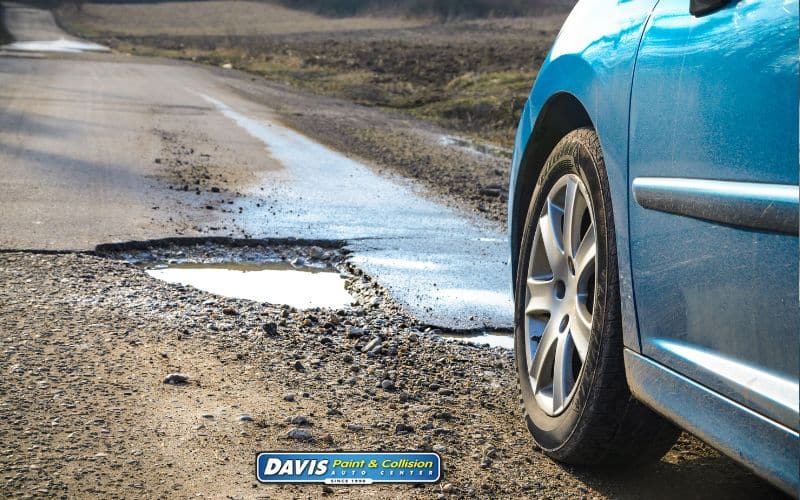
Every Oklahoma driver knows the feeling — you’re cruising down the road, and out of nowhere your car drops into a pothole hard enough to rattle your teeth. It’s easy to shrug it off and keep driving, especially if nothing looks obviously wrong. But potholes are one of the sneakiest sources of vehicle damage out there, and the real cost often shows up weeks or months later in ways you wouldn’t immediately connect to that one bad jolt.
More Than Just a Bad Bump
A pothole strike delivers a sudden, concentrated impact to your wheel, tire, and suspension — very different from the everyday wear of normal driving. Depending on the size of the pothole and your speed, that impact can cause:
- Tire damage — sidewall bulges, punctures, or internal belt separation that may not be visible from the outside
- Bent or cracked wheels/rims — especially common with lower-profile tires and larger wheels
- Alignment problems — even a moderate hit can knock your wheels out of alignment, leading to uneven tire wear
- Suspension damage — struts, shocks, ball joints, and control arm bushings can all take a beating from a hard impact
- Exhaust system damage — deeper potholes can strike the underside of the vehicle directly
The tricky part is that many of these issues are gradual. Your car might drive fine for a few weeks before you start noticing a pull to one side, a vibration at highway speed, or a knocking sound over bumps.
Signs You Shouldn’t Ignore
After hitting a significant pothole, keep an eye out for:
- The steering wheel pulling to one side
- Vibration in the steering wheel or seat, especially at higher speeds
- Uneven or rapid tire wear
- A noticeably rougher or bouncier ride
- Any new noises when turning or going over bumps
If you notice any of these, it’s worth getting your alignment and suspension checked sooner rather than later. Small problems left unaddressed tend to accelerate tire wear and put extra strain on other components, turning a simple fix into a more expensive one. We go into more detail on this in our article on signs your car needs an alignment.
Protecting Yourself Before the Impact
You can’t avoid every pothole, but a few habits help minimize the damage:
- Keep a safe following distance so you have time to see and react to road hazards
- Slow down when approaching standing water, since it can hide a pothole underneath
- Keep tires properly inflated — underinflated tires are more prone to pothole damage
- Avoid swerving suddenly, which can cause you to lose control or strike a hazard at an angle that causes more damage
For more on staying ahead of everyday tire risks, check out our guide on avoiding a flat tire.
Why It’s Worth Getting Checked, Even If It “Feels Fine”
The instinct after a rough pothole hit is to check for a flat tire and move on if everything seems okay. But alignment and suspension issues don’t always announce themselves right away, and driving on a misaligned vehicle accelerates tire wear, reduces handling precision, and can even affect braking distance. What starts as a $100 alignment can turn into a much larger repair bill if a damaged component is left to wear against the rest of the suspension system.
Hit a Bad Pothole Recently?
If your car has taken a hard hit and something feels off — even just slightly — bring it in. Our automotive repair team can inspect your alignment, suspension, and tires to catch problems early, before they turn into bigger repairs or a blowout on the highway. Visit our automotive repair services page to see how we can help, or give one of our Oklahoma City or Midwest City locations a call to schedule an inspection today.