
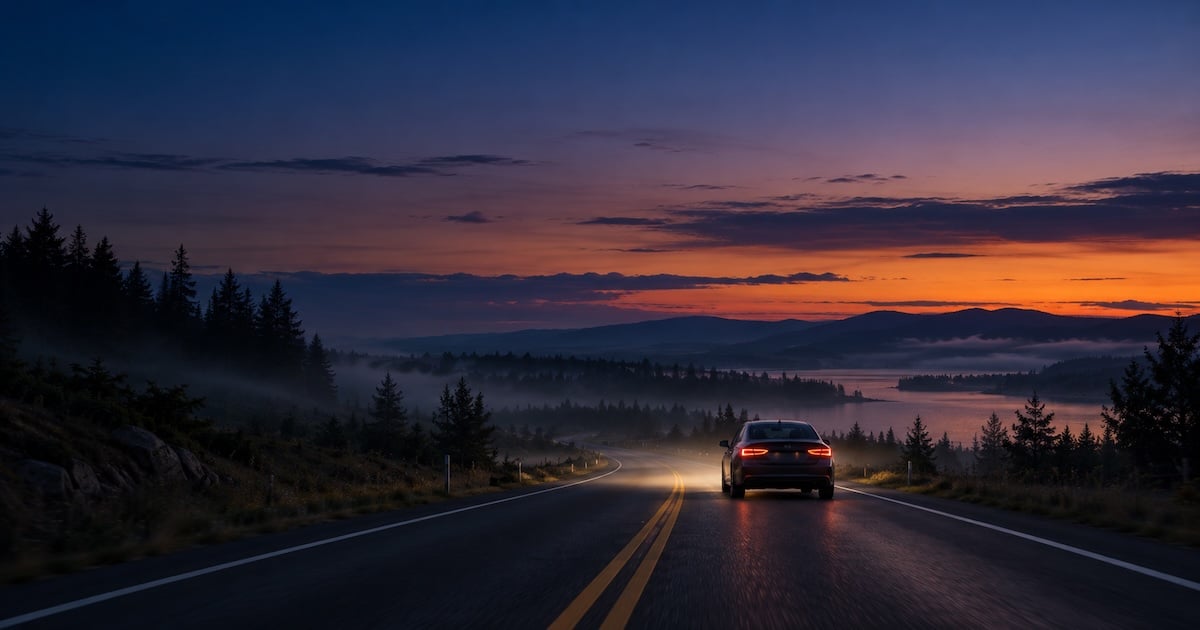
Night driving safety: glare, fatigue, and reaction time
The clocks go back on November 1, and for a lot of us that means the drive home from work will happen in the dark. If you feel a little more tense behind the wheel after sunset, you’re not imagining it. Your eyes and your brain are both working harder than they do in daylight.
Why it’s harder to see at night
When the light drops, you lose depth perception, color detail, and a good chunk of your peripheral vision. Your headlights help, but they only reach so far. Low beams light up roughly 150 to 200 feet of road. At 60 mph, a typical car needs around 300 feet to stop once you count the time it takes you to react.
Do that math and the problem is easy to see. At highway speed, you can end up driving faster than you can see. Easing off the gas a little gives you the room your headlights can’t.
Dealing with glare
Oncoming headlights are the obvious culprit, and the taller, brighter lights on newer trucks and SUVs don’t help. A few habits make a big difference:
- Look toward the right edge of your lane instead of straight at oncoming lights.
- Flip your rearview mirror to its night setting so the car behind you isn’t blinding you.
- Clean your windshield inside and out. That hazy film on the inside builds up faster than you’d think, and it scatters light.
- Dim your dash and infotainment screen so your eyes aren’t constantly readjusting.
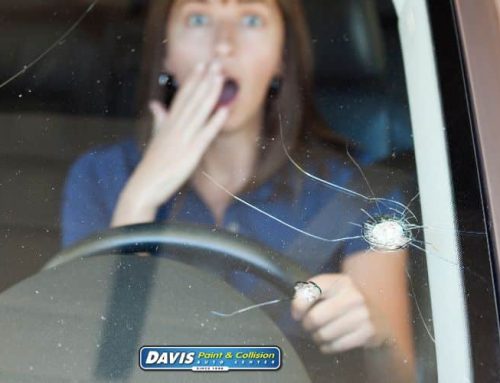
Pits and chips in the glass scatter light too. If you see starbursts around every streetlight, read our article on windshield and auto glass damage. Your windshield may be the cause.
Fatigue sneaks up on you
Your body expects to be asleep after dark, and it doesn’t care that you’ve got a 45 minute drive ahead. Drifting in your lane, heavy eyelids, missing a turn you know well, and yawning over and over are all signs you’re fading. Coffee helps for a little while, but it doesn’t fix being tired. If you catch yourself nodding off, pull into a safe spot and rest for 20 minutes, or hand the keys to someone else. No schedule is worth the risk.
Giving yourself more time to react
In daylight, a three second gap behind the car in front of you is a good rule. At night, stretch it to four or five. Scan the edges of the road as well as the road itself, because that’s where animals show up. Deer are most active at dusk and after dark, especially this time of year, and our deer season safety driving tips cover what to do when one steps out in front of you.
Keep your phone put away, too. A quick glance at a bright screen leaves your eyes needing a moment to readjust, which is one more reason to read our piece on distracted driving in the age of smartphones.
Check your headlights
Headlights age slowly enough that you don’t notice. Lenses get cloudy or yellow, bulbs dim, and the aim can shift, especially after a front end hit. You can test yours at home. Park about 25 feet from a garage door or wall at night and turn on your lights. Both beams should look even and sit at the same height. If one points at the treetops or looks noticeably dimmer, it’s time for a closer look. A misaimed headlight gives you less usable road and blinds other drivers at the same time.
Get your car ready before the days get short
If your headlights look dim, your windshield is causing glare, or you’ve had a bumper repair and never had the lights checked, give us a call. Our automotive repair team can inspect your bulbs, wiring, and lighting, and if a front end collision knocked a headlight out of position, our collision repair technicians can get it back where it belongs. Call one of our Oklahoma City or Midwest City locations and we’ll get you set up for the long evenings ahead.